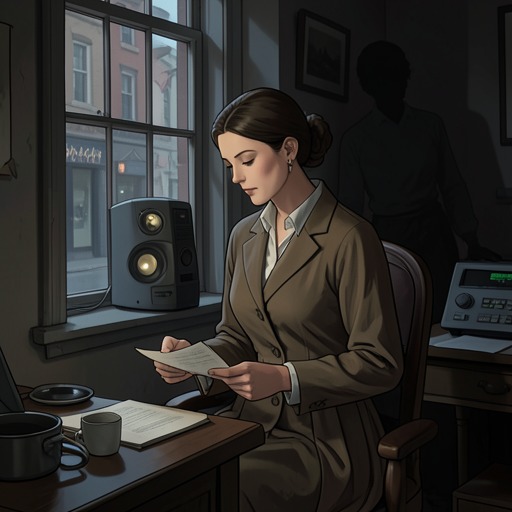
Edwina’s paternity revelation
A Woman of SubstanceEdwina’s paternity revelation turns a name that had long appeared settled on paper into the beginning of a family truth Emma Harte had withheld for decades. Emma tells Edwina that her father was Edwin Fairley, not Blackie O’Neill, and explains that Blackie had allowed his own name to stand on the birth certificate to spare Edwina the stigma of having no father named. The disclosure links an old, private history to the coming marriage of Paula and Jim Fairley, and gives Emma a chance to end a secret that had shaped the identities and relationships of several people.
The secret’s origin
The concealed history began when Emma was sixteen, almost penniless, and carrying Edwina. She had told Edwin she was going to have a baby. He was shocked and considered marriage, including eloping to Gretna Green, but the prospect of his father’s fury and the loss of his future as a barrister at Cambridge stopped him. His thoughts also turned on the class distance between them: Emma was a village servant, and he judged that the difference between them was too great to bridge. He remained silent rather than claim her as his own.
Emma understood that silence as a refusal to marry her. She would not go to a doctor, and she confronted Edwin with the gulf between the gentry and the working class. His failure to stand by her left her to manage the pregnancy and the child’s identity without his public acknowledgment. The later revelation therefore does more than identify Edwina’s biological father: it names the consequence of Edwin’s retreat from a decision he had briefly contemplated.
A name chosen for protection
Blackie was Emma’s only friend when she faced the birth alone. He asked her to marry him, but she refused. When Emma considered the birth certificate, Blackie pointed out that registration in Leeds required the father’s name. She did not want to name Edwin. Blackie offered to have his own name entered instead, reasoning that a named father, even one who was not the biological parent, would spare the child the further stigma of the words father unknown. He also believed the arrangement might offer some protection to Emma and Edwina.
The name was not an accidental clerical detail. Blackie made the offer knowing that Edwina would still be recorded as illegitimate, but he thought his name preferable to an explicit absence. He insisted on accompanying Emma to the registrar’s office and accepted the responsibility as a godfather and friend. The document consequently preserved a practical, protective fiction: it gave Edwina a recorded father while concealing Edwin’s identity.
Emma maintained that distinction in later relationships. When Joe Lowther proposed, she told him candidly that Edwina was illegitimate but withheld the father’s identity, repeating the story she had earlier given Blackie. Joe accepted her past without demanding further explanation. Emma believed she had to disclose the child’s circumstances, but the identities around the name Winston Harte made a fuller account difficult: Joe believed Emma was the widow of a sailor called Winston Harte, while her brother Winston was also a sailor. After marrying Joe, she eventually explained the half-truths to Laura O’Neill and David Kallinski. When she told her brothers, Frank Harte did not criticize her; Winston Harte reacted angrily before persuading himself that Emma had been deceived, a conclusion that let him preserve his idealized view of his sister.
Emma tells Edwina
At their later conversation, Emma asks to speak privately about Edwina’s father. Edwina objects to Blackie’s presence in the house, describing him as an intolerable man whose presence makes her uncomfortable. Emma corrects her: Blackie is not her father. Edwina immediately points to the birth certificate, where his name appears, and Emma explains that it was entered for reasons Edwina had not known. Only after setting out Blackie’s motives does Emma give the answer plainly: Edwin Fairley was Edwina’s father.
The name changes the meaning of both the document and Edwina’s family history. Edwina recognizes Edwin as Sir Edwin Fairley, the celebrated criminal lawyer who died the previous year, and as one of the Fairleys from Fairley village. Emma confirms the identification. The revelation is not a suggestion or an uncertain recollection; it identifies the father whose absence from Edwina’s upbringing had been obscured by Blackie’s deliberately protective role.
Why the truth emerges now
Emma connects her decision to disclose the truth to Paula’s engagement to Jim Fairley, Edwin’s only grandson. Jim’s parents died in a plane crash in 1948, making Edwina his only living blood relative in that line. Emma believes he should know that Edwina is his aunt, and she wants Paula and Jim to begin their marriage without an old secret hanging over them. She also says that Edwina is owed the truth, acknowledging that the disclosure is long overdue.
Edwina’s response is not shame at the identity Emma reveals. She recognizes Edwin’s reputation and standing, and says she is not ashamed to acknowledge him as her father. She gives Emma permission to tell Jim. That response allows the secret to become knowledge that can be shared across the family rather than a concealed fact Emma alone controls. The revelation thus prepares the way for Paula and Jim’s marriage while repairing, at least in this matter, the missing connection between Edwina and the Fairley family.
Significance
The episode sets legal naming against biological truth and personal care. Blackie’s name on the certificate was false as a statement of paternity but compassionate as a response to the burdens Emma feared Edwina would bear. Emma’s silence, meanwhile, protected the child from exposure to a painful family history, yet left Edwina with a mistaken understanding of her own kinship. Telling her the truth does not undo the years of concealment; it gives the next generation the information needed to recognize its relationships openly.
The timing also brings private consequences into the present. Edwin’s earlier refusal had separated Emma from the father of her child; decades later, identifying him makes Edwina part of Jim’s family and gives Emma a reason to seek an end to the old concealment. What began as a name chosen to protect a child becomes a secret that must be explained before another marriage can proceed without hidden family history.